


The Crucial Role of HDPE Eccentric Reducers in Modern Geothermal Heating Networks
As the global energy transition accelerates, geothermal heating systems have emerged as one of the most reliable, sustainable, and low-carbon alternatives to fossil-fuel-based heating. These systems harness the consistent thermal energy stored beneath the Earth's surface to provide space heating, hot water, and industrial process heat. However, the efficiency and operational longevity of a ground source heat pump (GSHP) or district geothermal network rely heavily on the integrity of its underground piping infrastructure.
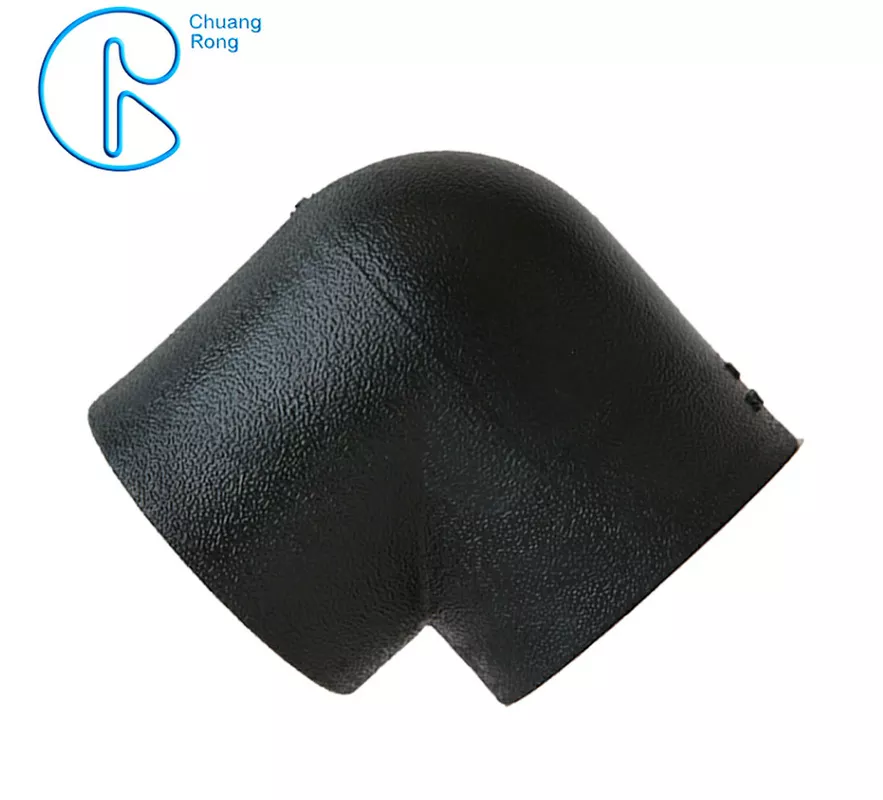
Among the critical components within these networks is the HDPE (High-Density Polyethylene) Reducer Eccentric. While standard concentric reducers are common in vertical piping, eccentric reducers are indispensable in horizontal pipeline layouts. By maintaining a flat alignment along the top (or bottom) of the pipe run, eccentric reducers prevent the formation of air pockets, ensure smooth fluid dynamics, and mitigate pressure losses—factors that directly influence the coefficient of performance (COP) of geothermal heat pumps.
⚡ Why Eccentric Over Concentric Reducers?
In horizontal geothermal piping runs, air bubbles naturally migrate to the top of the pipe. If a concentric reducer is used to transition to a smaller pipe diameter, it creates a physical step-up at the top of the pipeline, trapping air. This trapped air creates an "air lock," reducing the effective flow area, increasing pump workload, and potentially leading to cavitation. An HDPE eccentric reducer keeps the top of the pipe perfectly flat, allowing air to flow unimpeded to air release valves or manifold headers.
Commercial and Industrial Status of Geothermal Heating Systems
Historically, geothermal heating was limited to regions with high tectonic activity, such as Iceland or parts of New Zealand. Today, thanks to advancements in closed-loop ground source heat pumps and deep geothermal drilling, commercial and industrial geothermal systems are being deployed globally. From large-scale municipal district heating networks in Northern Europe to agricultural greenhouses in North America and industrial process plants in Asia, geothermal is scaling rapidly.
Industrially, the demand for high-capacity piping systems has surged. Geothermal loops must withstand continuous operation for 50 to 100 years without maintenance. Traditional metal piping systems are highly susceptible to corrosion, scaling, and chemical degradation from minerals present in groundwater or heat transfer fluids (such as glycol mixtures). Consequently, High-Density Polyethylene (HDPE), specifically PE100 PN16 and SDR11 grades, has become the industry standard due to its absolute corrosion resistance, flexible nature, and leak-free fused joints.
Technical Deep Dive: HDPE Eccentric Reducer Design & Engineering
When designing geothermal header systems and manifold stations, engineers must calculate fluid velocity, pressure drop, and thermal expansion. The HDPE Reducer Eccentric plays a key role in these calculations:
- SDR (Standard Dimension Ratio) Compatibility: Geothermal loops typically utilize SDR11 or SDR17 piping. The eccentric reducer must match these wall thicknesses to ensure uniform pressure ratings (e.g., PN16 or PN10) and seamless butt-fusion or electrofusion welding.
- Stress Distribution: Earth movements, backfill settling, and thermal expansion put mechanical stress on buried joints. HDPE's inherent elasticity allows the eccentric reducer to absorb these stresses without cracking, unlike rigid PVC or metallic fittings.
- Chemical Inertness: Geothermal heat transfer fluids often contain corrosion inhibitors, antifreeze agents (ethanol, propylene glycol), or saline solutions. PE100 resin is chemically inert, preventing degradation over decades of exposure.
Deep Application Scenarios in Geothermal Systems
1. Horizontal Loop Manifolds
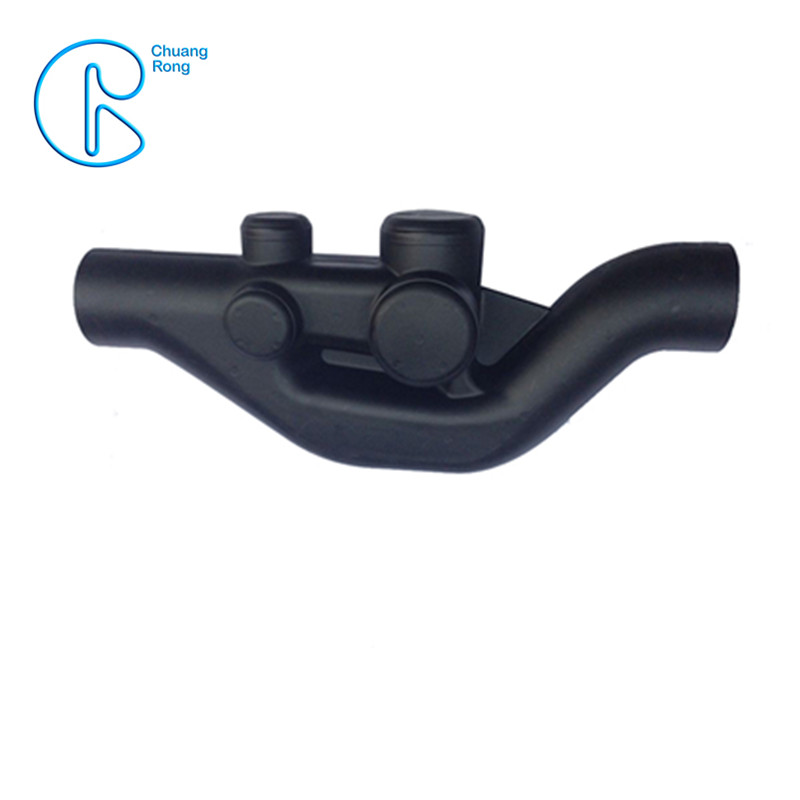
In large commercial installations, hundreds of vertical boreholes or horizontal ground loops are routed back to a central manifold. As individual loop lines (often 32mm or 40mm) join the main header pipe (which can exceed 110mm to 250mm), rapid diameter changes occur. Using HDPE eccentric reducers at the horizontal manifold connections prevents air locks, ensuring that the glycol mixture circulates with minimal resistance and maximum heat exchange efficiency.
2. District Heating Sub-Stations
District heating networks distribute hot water from a central geothermal source to entire neighborhoods. At sub-stations, flow rates must be regulated and pipe sizes reduced to match building inlets. Eccentric reducers allow for compact, space-saving layouts along walls or ceilings while keeping horizontal pipelines aligned for easy support bracket installation.
3. Industrial Heat Recovery & Deep Wells
In high-temperature industrial geothermal applications, water is extracted from deep aquifers at temperatures exceeding 80°C. High-temperature resistant PE-RT (Polyethylene of Raised Temperature) or heavy-duty PE100 fittings are utilized. Eccentric reducers facilitate the transition from high-volume extraction mains to processing equipment, managing pressure drops and preventing turbulent flow zones that could accelerate wear.
Market Trends & Future Outlook
The future of geothermal piping is shifting toward smart infrastructure and high-performance materials. Manufacturers are developing pre-insulated HDPE pipes and fittings to minimize heat loss in district networks. Furthermore, the integration of RFID tags and smart sensors within electrofusion fittings allows installers to track pipeline layouts and monitor joint integrity in real-time via GIS mapping.
Globally, government incentives and carbon tax regulations are driving commercial real estate developers to implement geothermal heating and cooling. This has created a massive, sustained demand for certified HDPE fittings that meet strict international standards, such as ISO 4427, EN 12201, and ASTM D3035. As systems grow larger and more complex, the engineering focus on hydraulic optimization—where eccentric reducers play a pivotal role—will only intensify.