


Featured Cable Conduit Installation Equipment & Fittings
Engineered for robust underground pipeline connections, ensuring absolute protection for high-voltage and fiber-optic cables.

Industrial Status & Technological Advancements of Electrofusion Welders
How state-of-the-art electrofusion jointing guarantees the integrity of underground power grid conduits.
Uncompromising Joint Strength
Electrofusion creates a joint that is chemically and structurally as strong as, or stronger than, the parent pipe itself. This ensures the conduit can withstand high tensile loads during trenchless installations.
Absolute Moisture Protection
Water ingress is the leading cause of underground cable failure. Electrofusion welding guarantees a hermetically sealed joint, preventing groundwater from entering the electrical ducting.
Smart Traceability
Modern electrofusion welders feature integrated barcode scanners and data logging systems, ensuring every joint is traceable, compliant with international standards, and easily auditable.
Commercial & Industrial Status of Underground Cable Conduits
Deep Application Scenarios of Electrofusion Welders
The application of electrofusion technology in cable conduit installation spans several critical infrastructure sectors:
- High-Voltage Cable Protection: High-voltage underground cables generate significant heat. Electrofusion-welded HDPE conduits maintain their structural integrity under elevated thermal conditions, ensuring the safety of the surrounding soil and structures.
- Trenchless Horizontal Directional Drilling (HDD): In urban areas, digging open trenches is often impossible. Conduits are pulled through drilled underground paths. Electrofusion joints offer high tensile strength, ensuring the pipe line does not pull apart during the pulling process.
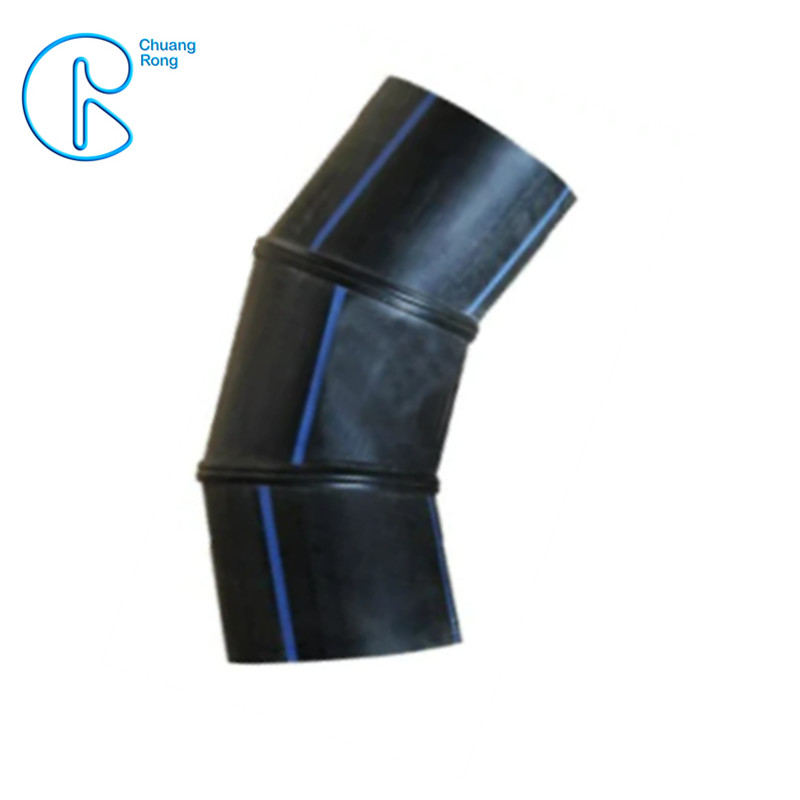
- Substation Cable Risers and Bends: Where cables enter substations, the routing involves complex bends. Fabricated and electrofusion fittings allow for tight, secure configurations without compromising the protective envelope.
- Subsea and River Crossing Conduits: When cables must cross bodies of water, the conduits must be completely waterproof. Electrofusion provides the absolute seal required to prevent underwater pressure from breaching the conduit.
Technological Trends in Electrofusion Jointing
The electrofusion welding industry is undergoing a digital revolution. Modern welding units are no longer simple power sources; they are smart computers equipped with:
- GPS Geotagging: Recording the exact geographic coordinates of every weld for digital mapping of utility networks.
- Ambient Temperature Compensation: Automatically adjusting the welding energy and time based on the surrounding temperature to ensure a perfect weld every time.
- Cloud Data Synchronization: Allowing project managers to monitor welding quality and progress in real-time from remote offices.
Ensuring Quality Control and Standard Compliance
CHUANGRONG: One-Stop Solution for Plastic Piping Systems
Over 20 years of manufacturing and supply experience across 80 countries worldwide.
One-Stop Supplies & Solutions for Cable Conduit Projects
As one of the largest PE pipeline manufacturers in China, CHUANGRONG provides customers with a full range of services from design, production, installation, and maintenance to ensure the long-term stable operation of PE pipeline systems.

Complete Product Line
CHUANGRONG offers the most complete product line including PE pipes, PE butt fittings, PE electrofusion fittings, PE socket fittings, PE syphon drainage fittings, PE valves, PE/steel transition fittings, PE machined fittings, PE fabricated fittings, PP compression fittings, plastic pipe welding machines & tools, pipe connectors & repair accessories, and more.

Related Products & Services
We supply PE pipe/rod extrusion lines, injection molding machines, robotic arms, butt fusion fittings molds, electrofusion fittings molds, PP back rings molds, CNC control machines, CNC lathe machines, workshop fitting machines, band saws, testing equipment, resistance testers, steam-diving pin machines, barcode printers, cranes, forklifts, chillers, mold controllers, and central feeding systems.

Installation & Maintenance
CHUANGRONG provides comprehensive pipeline services from construction to commissioning, ensuring that pipeline connections are secure and leak-free. We employ butt fusion, electrofusion, and mechanical connections to efficiently complete all installation tasks.

Design & Customization
Our professional team designs pipeline systems tailored to customer needs, ensuring a logical layout, reduced pressure loss, and optimal performance. We develop new molds and customized products to satisfy specific project parameters.

Technical Support
We deliver reliable expertise and technical data at every stage of your project. Our certified professionals provide comprehensive on-site training and consulting for engineering teams worldwide to guarantee installation quality.
Why Choose CHUANGRONG for Your Conduit Projects?
We combine manufacturing scale, rigorous quality control, and engineering expertise to deliver superior piping systems.

ONE-STOP SOLUTION
CHUANGRONG and its affiliates specialize in the R&D, production, sale, and installation of new-type plastic pipes and fittings. We provide perfect, custom-designed solutions for PE pipe systems.

PRODUCTION ON DEMAND
Operating five factories, we are one of China's largest suppliers. With 100+ pipe lines and 200+ fitting machines, our annual capacity exceeds 100,000 tons across 7,000+ specifications.

COMPLETE CERTIFICATION
Our advanced detection equipment ensures quality control from raw material to finished product. Certified by ISO9001-2015, CE, BV, SGS, and WRAS, meeting ISO, ASTM, EN, DIN, and AS/NZS standards.

EXCELLENT TEAM
Our experienced team is built on Integrity, Professionalism, and Efficiency. We maintain active business relationships across 80+ countries, including the USA, Chile, UAE, Saudi Arabia, and Indonesia.
Future Trends in Electrofusion for Underground Infrastructure
How automation, materials science, and smart grids are shaping the next generation of cable conduit installations.
Trenchless Technology and Electrofusion Jointing
Optimizing Electrofusion Parameters for MPP and HDPE Conduits
Complete Product Portfolio for Underground Piping & Conduits
Explore our complete range of high-density polyethylene pipes, electrofusion fittings, compression connections, and professional welding machinery.

Social Links


Our Company
information
Quick Links
contact us
-
ADD:
Room 911, Building T1, The Ring Center, No.333 Dongda Road, Chengdu, China.
- TEL: 0086-18180897627
- EMAIL: chuangrong@cdchuangrong.com
Hot Products - Sitemap - AMP Mobile
Pe Water Pipe, Hdpe Pipe Fittings, Hdpe Pipe And Fitting, Repair Clamp, Male Adaptor, Hdpe Pipe Fitting,
-

Phone
-

E-mail
-

Whatsapp
-

Skype
-

Top
