


The success of a municipal water network or a deep-sea dredging operation often hinges on components that remain entirely out of sight. In a recent project involving high-pressure liquid transport across rugged terrain, engineers faced a familiar dilemma: standard connectors showed signs of stress under thermal fluctuation, threatening the integrity of the entire line. This scenario highlights why the selection of a High-Quality HDPE Fitting Manufacturer For Large-Scale Infrastructure Projects is a critical technical decision rather than a simple procurement task. High-quality HDPE fittings must provide leak-proof fusion and environmental stress crack resistance to ensure a service life exceeding 50 years.
Globally, the supplier market is increasingly bifurcated; while many vendors offer basic molded parts, only a few possess the heavy-duty extrusion capabilities and comprehensive testing protocols required for the 20mm to 1600mm diameter ranges used in modern industrial applications.
Regulatory Compliance And International Certification As A Baseline
In the technical world of fluid dynamics and gas distribution, trust is built through documented verification. When evaluating a high-quality HDPE fitting manufacturer, the first filter is their adherence to international pressure and safety standards. High-performance polyethylene components are not universal; they must meet specific SDR (Standard Dimension Ratio) ratings, such as SDR11 or SDR17, to match the pressure requirements of the host pipe.
A reliable manufacturer demonstrates competence by aligning their output with global benchmarks like ISO, CE, and various national water and gas safety certifications. For infrastructure experts, these are not just badges but evidence that the fitting can withstand specific bars of pressure without deformation. The transition from regional production to international supply requires a rigorous understanding of how different climates and soil chemistries affect high-quality HDPE. Suppliers that prioritize these certifications reduce the risk of catastrophic failure in high-stakes environments like mining or chemical processing.
Vertical Integration And Total Process Quality Control
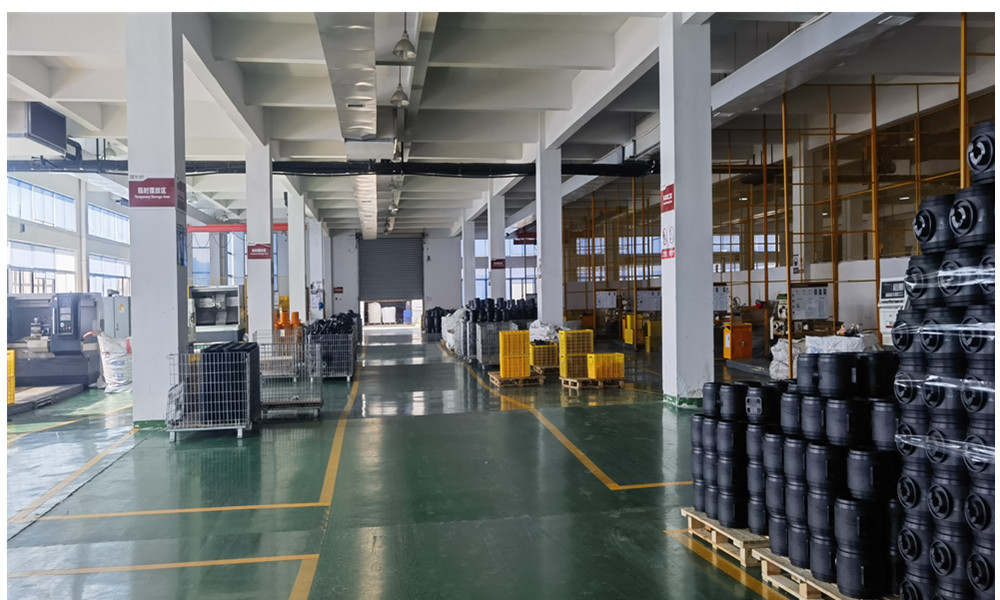
The internal structure of a manufacturer often dictates the reliability of the end product. Established in 2005, a share industry and trade integrated model exemplifies the transition from a specialized workshop to a sophisticated manufacturing entity. This model is particularly effective for quality assurance because it allows for oversight from the raw material stage to the final logistics. A manufacturer operating over 100 pipe production lines and 200 sets of fitting equipment possesses the mechanical redundancy to maintain consistency even during high-volume runs.

True high-quality HDPE fitting production involves more than just injection molding. It requires a meticulous quality control system where every batch undergoes thermal stability tests, longitudinal reversion assessments, and hydrostatic pressure trials. By controlling the entire manufacturing loop, a supplier can ensure that the resin density and carbon black dispersion are uniform. This technical depth is essential for large-scale projects where a single weak fitting can compromise kilometers of infrastructure. When a manufacturer scales its capacity to over 100,000 tons, the ability to maintain precision at every millimeter of the 20-1600mm range becomes the ultimate mark of a high-quality HDPE fitting manufacturer.

Complete Product Ecosystem And Engineering Support
Large-scale projects rarely require a single type of part. A significant challenge for engineers is the "compatibility gap"—the risk of sourcing pipes from one vendor and fittings from another, only to find discrepancies in fusion compatibility. Identifying a high-quality HDPE fitting manufacturer often means looking for a partner that provides a holistic system. This includes not just the fittings themselves, but also the plastic welding machines, pipe tools, and repair clamps necessary for field installation.
Systemic Diversity In High-Density Polyethylene
A versatile manufacturer should offer a catalog that spans multiple utility sectors. Common series include:
- l Potable water and municipal sewage systems.
- Natural gas distribution networks requiring high-safety coefficients.
- Dredging and mining lines designed for high abrasion resistance.
- Irrigation and electrical conduit systems.
With more than 7,000 specifications and a full range of SDR options from SDR26 to SDR7.4, a high-quality HDPE fitting manufacturer ensures that engineers do not have to settle for "near-miss" sizes. This variety allows for more precise hydraulic modeling and reduces the need for custom adapters, which are often the weakest points in a pressurized system.


Proven Performance In Diverse Global Environments
The final metric for any high-quality HDPE fitting is its performance in the field. Infrastructure projects in regions like Africa, Southeast Asia, and Central Asia present unique challenges, from extreme UV exposure to shifting seismic conditions. A manufacturer’s reputation is cemented through its participation in international exhibitions and its track record in UN-supported initiatives or large-scale municipal projects in developing urban hubs.
When high-quality HDPE components are deployed in dredging projects in Malaysia or water supply networks in Mongolia, they are tested against real-world mechanical stresses. A manufacturer with a history of successful international supply since 2005 understands the logistics of long-distance transport and the necessity of durable packaging. Reviewing a supplier's past involvement in diverse markets—ranging from sand mining to electricity cabling—provides a clear indicator of their ability to handle the complexities of global trade and technical site requirements.
Sustainable Practices And Material Integrity
Modern infrastructure is increasingly defined by its environmental footprint. A high-quality HDPE fitting manufacturer today must integrate sustainable practices into their core operations. Polyethylene is inherently recyclable, but the "quality" aspect also refers to the longevity of the product. By producing fittings that do not corrode or leak, manufacturers contribute to water conservation and reduce the frequency of energy-intensive repairs.
Sustainability also manifests in the efficiency of the manufacturing plant. Advanced production lines that minimize scrap and optimize energy consumption reflect a forward-thinking approach to industrial management. For project stakeholders, choosing a supplier committed to these principles ensures that the project meets both technical specifications and modern environmental mandates.

Conclusion: Transforming Selection Criteria Into Action
Identifying the right high-quality HDPE fitting manufacturer requires a move away from price-centric procurement toward a value-based technical assessment. By focusing on four key pillars—international certification, vertical manufacturing integration, system completeness, and global project history—decision-makers can mitigate the long-term risks associated with infrastructure failure.
The integration of high-quality HDPE solutions into global networks is not merely about moving fluids; it is about building the durable foundation of modern civilization. Companies like CHUANGRONG, which combine nearly two decades of expertise with a massive 100,000-ton production scale and a commitment to rigorous testing, represent the benchmark for these criteria. Selecting a manufacturer that views every fitting as a critical link in a global chain of reliability ensures that today's infrastructure remains tomorrow's legacy. For more technical specifications and project insights, visit: https://www.cdchuangrong.com/, please contact us +86-28-84319855, chuangrong@cdchuangrong.com.
Post time: Apr-07-2026


