


Why Capability Audits Must Precede Unit Cost Evaluation
In high-pressure gas, mining, and municipal distribution pipelines, fittings represent barely 15% of total capital expenditure but drive over 80% of catastrophic pipeline failures.
For procurement directors, commercial engineers, and international project buyers, comparing supplier pricing matrices before verifying engineering capability is an expensive hazard. In real-world field executions, price-first procurement triggers a sharp spike in electrofusion and butt fusion weld failure rates.
Substandard fittings typically exhibit inconsistent melt flow indexes (MFI), carbon black agglomeration, or high levels of recycled post-industrial scrap. These defects do not show on a pristine commercial quotation, but result in joint micro-cracking, slow crack growth (SCG), and costly trench rework during pressure testing.
This technical checklist serves as an engineering manual for evaluating original equipment manufacturers (OEMs). Before reviewing unit pricing, procurement teams must enforce strict factory audits covering raw resin verification, injection mold precision, in-house CNAS laboratory validation, and destructive pre-shipment tests.

Module 1: Raw Material Traceability & Resin Verification
A reliable HDPE fitting relies entirely on raw material homogeneity. Virgin grade PE100 resins dictate hydrostatic stability and longevity.
Batch-Specific MTR Demands
Require manufacturers to supply authentic batch Material Test Reports (MTR) directly mapped to incoming silo lots, not generic static certificates. Verify critical values including Melt Mass-Flow Rate (MFR 190°C/5kg between 0.2 to 0.4 g/10min), raw polymer density (≥0.955 g/cm³), and moisture content below 300 ppm.
Tier-1 Strategic Partnerships
Verify whether the manufacturer maintains direct pipeline allocations with petrochemical giants like Borouge (HE3490-LS) or SABIC (Vestolen A 6060 R). Direct procurement prevents unauthorized blending with low-density scrap resin or unstabilized processing aids.
Carbon Black Dispersion
Examine microscopic dispersion logs (ISO 18553). The carbon black concentration must sit strictly between 2.0% and 2.5% by mass, fully homopolymerized to ensure full UV defense and structural anti-oxidation for over 50 years of operating lifespan.
Module 2: Injection Molding & Tooling Precision
Dimensional stability and wall thickness uniformity dictate joint integrity under dynamic mechanical stresses.
In-House Tooling vs Outsourced Tooling
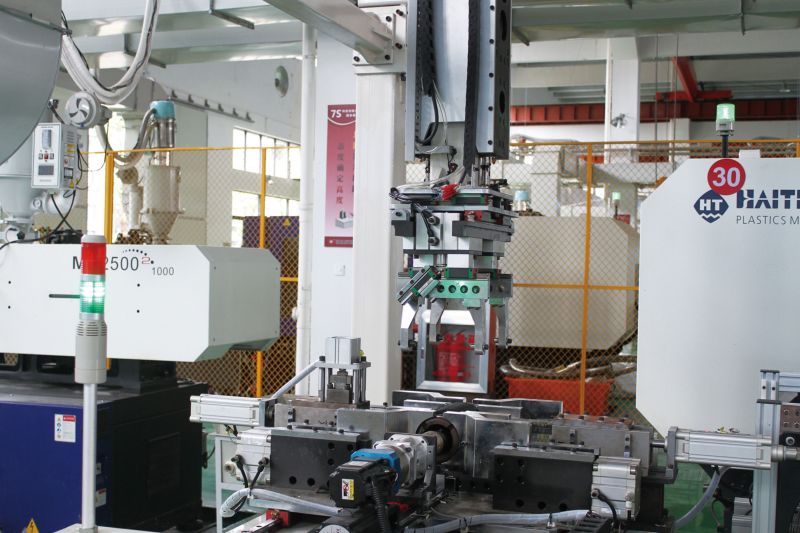
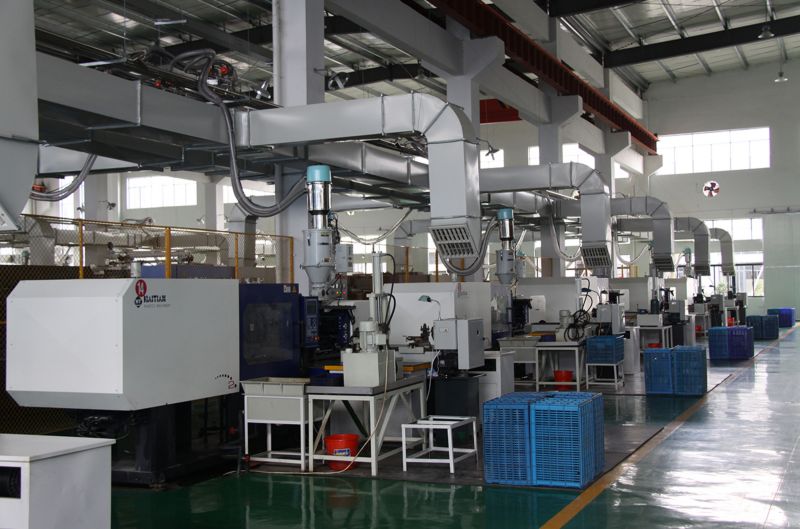
Facilities that rely on subcontracted molds often suffer long downtime and loose tolerance controls. At CHUANGRONG, with over 200 sets of advanced fitting production machinery and proprietary in-house tool construction, high-precision core-pulling mechanics deliver concentric profiles across sizes up to 1600mm.
Auditing engineers must observe the cooling cycles and multi-cavity injection pressures. Inadequate injection holding causes deep internal sink marks, voids, and residual stresses that trigger failure under cold-weather pressure testing.
Wall Thickness (SDR) Sampling Method
Sample cross-sections across four distinct 90° quadrants using high-resolution ultrasonic gauges. Ensure tolerances comply strictly with ISO 4427-3 or EN 12201-3 limits, confirming that SDR ratings (from SDR7.4 up to SDR26) show zero localized thinning near the flow weld line.
Factory Audit Scorecard: Evaluation Matrix
| Evaluation Pillar | Audit Criteria & Parameters | Pass Threshold | Risk Severity |
|---|---|---|---|
| 1. Raw Material Sourcing | 100% pre-compounded virgin PE100 (Borouge/SABIC); Batch-level MTR verification; Zero in-house regrind in structural pressure lines. | MTR Matched to Batch | Critical (Disqualification) |
| 2. Tooling & Molding | In-house CNC mold maintenance; Ultrasonic gauge checks on wall thickness (SDR7.4 - SDR26); Multi-axis injection cycle automation. | ±0.2mm - ±0.5mm Tolerance | High (Rework Required) |
| 3. Laboratory & Testing | CNAS accredited lab setup; Continuous 20°C & 80°C internal hydrostatic testing stations; DSC testing for OIT determination. | OIT > 20 Mins at 200°C | Critical (Disqualification) |
| 4. Packaging & Barcodes | Individual clean UV-shielded PE bags; Readable GS1/ISO 12176-4 fusion barcodes; Impact caps on spigot ends. | 100% Scan Readability | Medium (Corrective Action) |
Module 3: In-House Laboratory & Destructive Testing
A manufacturer's capability is bounded by the precision of its testing facilities. Verify third-party CNAS laboratory compliance and test frequencies.
Oxidation Induction Time (OIT)
OIT evaluates the thermal stabilization package in the polyolefin matrix. Demand Differential Scanning Calorimetry (DSC) curves run at 200°C per EN 728. Standard requirement: OIT > 20 minutes. Testing frequency must cover every major resin delivery batch.
Hydrostatic Burst Testing
Review the testing floor. Fittings must undergo short-term hydrostatic pressure (20°C, 100 hours at 12.4 MPa) and sustained thermal hydrostatic endurance (80°C, 165 hours at 5.4 MPa and 1,000 hours at 5.0 MPa) per ISO 1167 with zero ductal ruptures.
Accreditation & Approvals
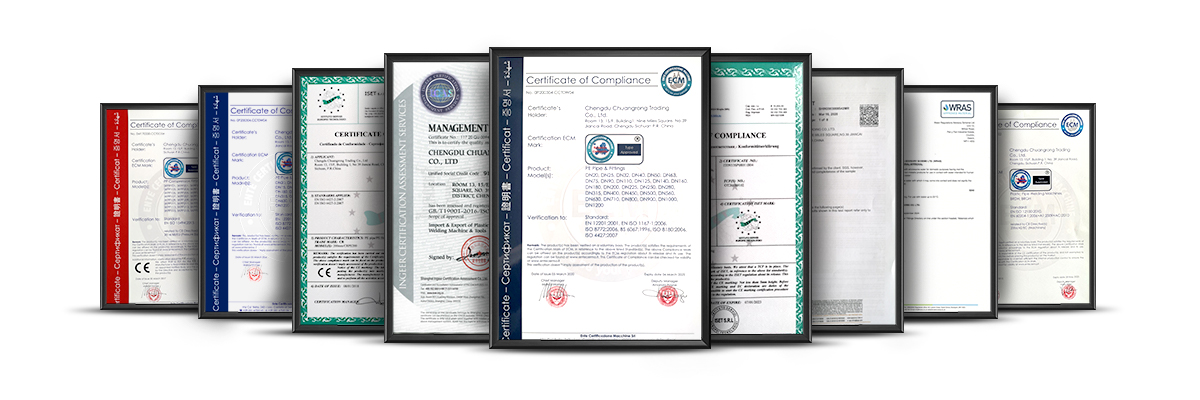
Fittings must meet ISO4427/4437, ASTMD3035, EN12201/1555, DIN8074, and AS/NZS 4130 standards. Confirm current certifications including ISO 9001:2015, CE, BV, SGS, and WRAS for global compliance.
Laboratory Infrastructure & Rigorous Quality Assurance
CHUANGRONG possesses complete detection methods with advanced analytical equipment to ensure stringent quality control across all stages: from raw polymer granules through compounding, cooling, injection, and final assembly.
Verify whether testing occurs in-house with automated real-time pressure transducers and temperature-regulated water baths. Independent data collection prevents altered reporting and guarantees that every batch released for packaging matches international specifications.
Module 4: Practical Pre-Shipment Inspection (PSI)
Physical verification directly at the loading bay prevents the delivery of compromised pipeline systems.
Field Fusion Destructive Testing
Randomly pull spigot or electrofusion fittings from export cartons. Fuse them to matched SDR pipe using standard job-site welders. Conduct mechanical squeeze-off, peel de-cohesion, or crushing tests (ISO 13954 / ISO 13955). The fracture surface must occur in the parent pipe body, not along the fusion plane.
Barcode & Embedded Resistor Audit
For electrofusion products, scan the 24-character ISO 12176-4 barcode using standard fusion controllers. Check automatic recognition of voltage, cycle time, and cooling duration. Measure electrical resistance with a calibrated multi-meter against nominal resistance specs.
Protective Packaging & Storage
Inspect terminal packaging lines. High-grade suppliers ship electrofusion sockets in UV-stabilized, sealed bags with silica gel packets to prevent moisture buildup on exposed copper coils. Spigots require protective end-caps to guard against out-of-round deformation.
Advanced Facility & Global Engineering Support
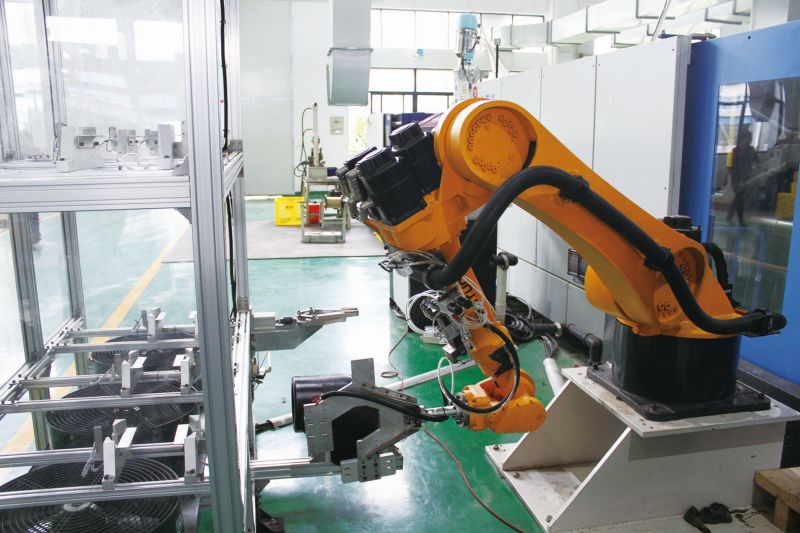
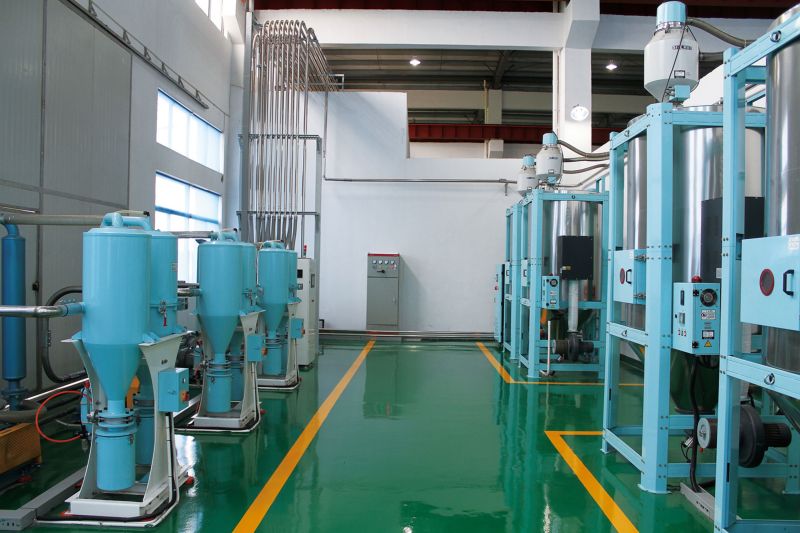
CHUANGRONG operates five factories housing over 100 high-efficiency pipe lines and 200 fitting production systems, offering integrated solutions across water, gas, dredging, mining, irrigation, and power sectors.



Standardize Your HDPE Pipeline Procurement
Ensure your fittings meet international design safety margins. Download our comprehensive, 28-point factory audit checklist to evaluate injection molders, material certifications, and testing workflows.
Download Our Factory Audit Checklist PDF
Social Links


Our Company
information
Quick Links
contact us
-
ADD:
Room 911, Building T1, The Ring Center, No.333 Dongda Road, Chengdu, China.
- TEL: 0086-18180897627
- EMAIL: chuangrong@cdchuangrong.com
Hot Products - Sitemap - AMP Mobile
Pe Water Pipe, Hdpe Pipe Fittings, Hdpe Pipe And Fitting, Hdpe Pipe Fitting, Repair Clamp, Male Adaptor,
-

Phone
-

E-mail
-

Whatsapp
-

Skype
-

Top
